


News
16/03/2026
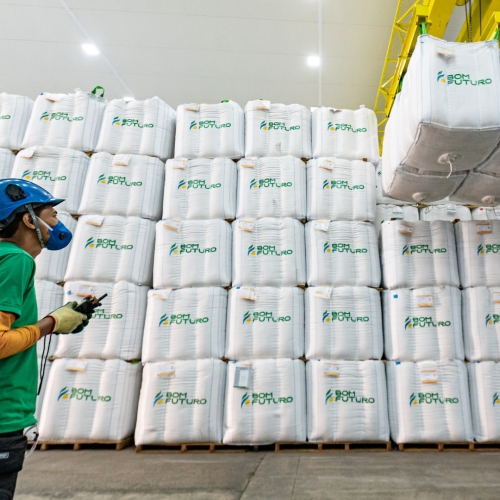
As the grain harvest season approaches its end, Bom Futuro has begun the industrial classification process at its four Seed Processing Plants (IBS) in Mato Grosso. At this stage, soybean, cotton, forage and cover crop seeds undergo classification, treatment and controlled storage, ensuring quality and high germination potential for use in the company’s fields and for commercialization to producers.
The plants are located at the Fartura production unit in Campo Verde (MT), Planta in Sapezal (MT), Sulina in Diamantino (MT) and Malu in Bom Jesus do Araguaia (MT). These facilities carry out the entire industrial process responsible for standardizing and preparing the seeds produced by the company.
Production follows regulations established by the Mato Grosso State Institute of Agricultural Defense (INDEA-MT) and the Ministry of Agriculture and Livestock (MAPA), ensuring technical control and traceability throughout all stages.
Quality care begins in the field. During the harvest of grains intended for seed production, harvesters operate under specific adjustments and at lower speeds, between 4 and 6 kilometers per hour, with the concave fully open. This strategy reduces mechanical damage and preserves the physiological potential of the material.
After harvest, the seeds are sent to the processing plants, where they undergo a rigorous classification process. The material is separated by size using screen classifiers, by shape using spiral equipment, by specific weight using gravity tables and by color using electronic color sorters, allowing the selection of more uniform seeds with higher productive potential.
In the next stage, the seeds undergo treatment with the application of insecticides, fungicides, biological products, polymers, drying powders and graphite. This process contributes to the initial protection of the plants and improves performance at planting.
According to Thereza Hass, Seed Production Manager at Bom Futuro, seed processing is a key step to ensure that seeds reach the field with high quality standards.
“Every stage of the process follows strict technical protocols, including careful physical classification, industrial seed treatment (TSI) and storage under controlled conditions. The goal is to preserve the physiological, sanitary and genetic quality of the seed lot, maintaining high levels of vigor and germination, which are essential to ensure strong agronomic performance in subsequent crops,” she said.
After processing, the bags are stored in warehouses with controlled environments, maintaining an average temperature of 16°C and relative humidity between 55% and 60%. These conditions help preserve seed vigor and physiological quality until the moment of use.
Marcelo Borges – Journalist Bom Futuro
imprensa@bomfuturo.com.br