


News
01/10/2026
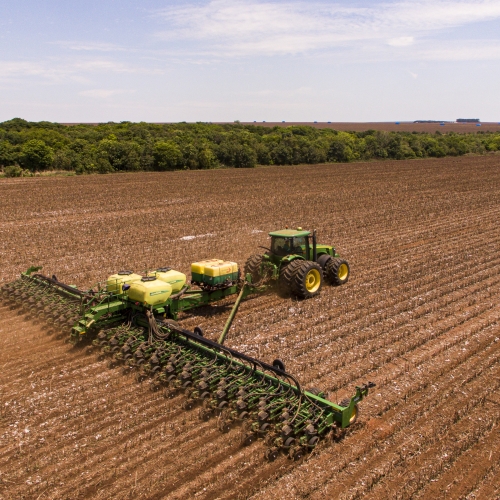
Benefiting from favorable rainfall since the beginning of the planting window, Bom Futuro is moving ahead with soybean planting for the 2026/2027 crop season in Mato Grosso. By the end of September, approximately 95,000 of the planned 360,000 hectares had already been planted, representing about 26% of the total area.
Planting began at the Água Limpa Production Unit, in Nova Ubiratã, Mato Grosso, and is progressing according to soil and moisture conditions in each region. The operation combines planning, technology and sustainable production practices, with a focus on the efficient use of natural resources and soil conservation.
According to Davi Mendes, Precision Agriculture Manager at Bom Futuro, the earlier arrival of rainfall has created favorable conditions for fieldwork. “It has been a very good year for planting. The rains arrived early, allowing us to make significant progress in September. Weather conditions have been very favorable so far,” he says.
In addition to accelerating soybean planting, the progress made in September also widens the window for second-crop planting. The first areas planted with soybeans will later be used for cotton, allowing the crop to be planted within a more favorable window.
“Planting a large area in September puts us in a very good position for the second crop. By finishing soybeans earlier, we can better manage the planting window for cotton and the other crops that follow,” Mendes explains.
At the current pace, most soybean planting could be completed in October, although the planned window may extend through mid-November. The first soybean fields are expected to be harvested in the second half of December.
Field conditions have also reduced the need for replanting. “We have had virtually no need for replanting. If conditions continue at this pace, we expect a very good, well-managed crop season, with planting and harvesting taking place within the best possible windows,” the manager adds.
Over the coming months, teams will continue monitoring crop development and weather conditions across the different production regions. As soybeans are harvested, the fields will begin transitioning to second crops, continuing the 2026/2027 agricultural cycle.
Marcelo Borges | Bom Futuro Journalist
Imprensa@bomfuturo.com.br